
The competitive and customer-driven e-commerce world has made last-mile delivery a necessity. Many businesses now rely on third-party logistics providers (3PLs) to cater to their customers’ evolving needs and strengthen their supply chain without investing in logistics infrastructure. For 3PLs, the final leg in order fulfillment presents unique challenges and is a critical aspect of e-commerce logistics with far-reaching implications for businesses.
Mastering last-mile delivery as a 3PL is key to your and your client’s success. This article navigates the challenges and key strategies to help you conquer last-mile delivery and remain ahead of a demanding market.
The last delivery step makes 3PLs indispensable because this is often the most challenging and expensive part of the fulfillment process, costing businesses up to 53% of the overall supply chain spending. For logistics companies, these high costs are just one of several challenges. Other obstacles you must overcome to provide exceptional delivery experiences include:
Logistics companies looking to streamline order fulfillment for their clients can use these strategies to optimize last-mile delivery.
Efficient route planning is at the core of last-mile delivery as it allows logistics businesses to determine the best routes during transit and minimize delivery challenges. Proper route optimization starts with a reliable routing algorithm that offers advanced capabilities to help calculate fleet routing based on real-time road conditions, weather patterns, delivery locations and even driver availability.
An advanced route optimization platform can even automate routing, creating a more reliable and hands-free process that reduces resource waste and idling. For 3PLs offering last-mile delivery, a reliable software that offers automation is key to maintaining high efficiency.
Transparency promotes customer satisfaction and results in fewer returns and positive reviews for your clients, all of which reflect your company’s delivery abilities. While customers appreciate fast deliveries, they also like to stay updated on the status of their orders, even in the event of unavoidable delays.
Real-time order tracking allows customers to track progress and view estimated timelines. You can also introduce automated alerts to keep them updated on any eventualities. Customers who are aware of possible delays and can plan accordingly are more likely to be satisfied with the delivery.
For businesses, more visibility into last-mile delivery provides insights to help you adjust processes that promote on-time delivery.
Choosing strategic warehouse locations is important because it determines how fast client goods can be secured and ultimately distributed to their final destination. As a last-mile expert, you are expected to reach customers wherever they are, and these locations could lie far outside your distribution center’s placement.
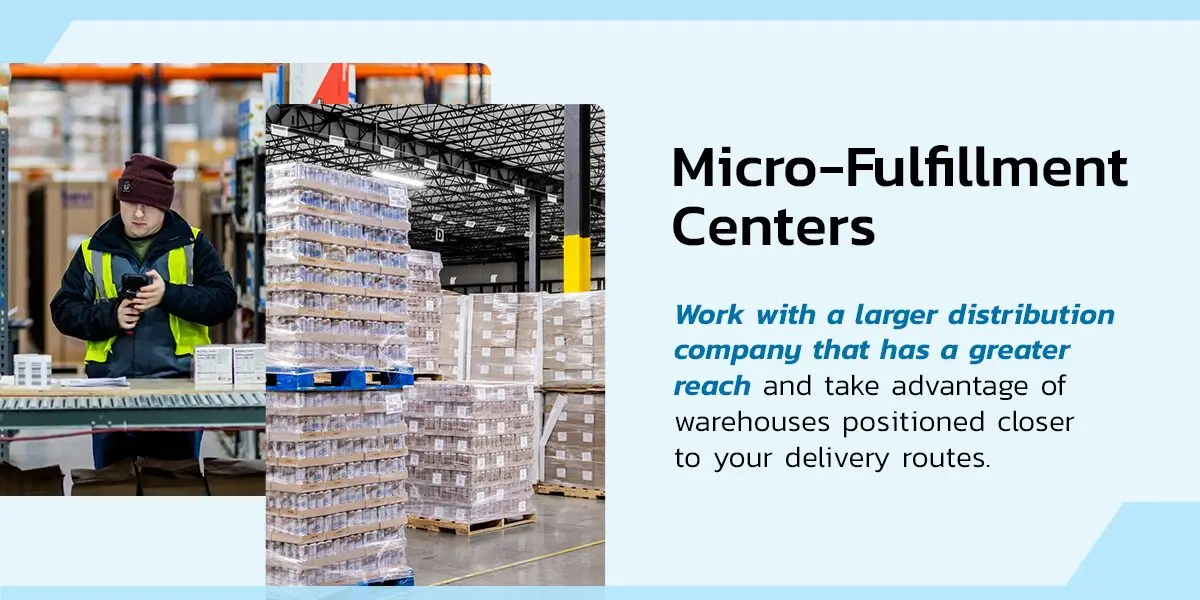
While opening new locations is not always practical, you can leverage micro-fulfillment, which means establishing small, permanent or even temporary stores that cater to your customer radius. These hubs are often ideal for delivery optimization because they are much closer to your common destinations than your main distribution centers.
You could also work with a larger distribution company that has a greater reach and take advantage of warehouses positioned closer to your delivery routes.
Data analytics is vital for 3PLs looking to scale and remain competitive. By analyzing delivery data, providers gain valuable insight into operational inefficiencies and long-term trajectories. A glimpse into expenses and customer behavior, for example, positions companies to make more informed decisions.
Leveraging data analytics lets companies monitor key performance indicators such as costs, on-time delivery rates and other delivery metrics. This data makes it easier to identify areas for improvement and respond to challenges on time.
For more effective data-driven operations, logistics managers can invest in software with predictive algorithms that enable the forecasting of delivery issues. Combining data analytics with predictive analytics can improve efficiency while minimizing disruptions.
Supply chain is driven by technological innovations that refine processes and improve customer experiences. The future of last-mile delivery is closely tied to these new ways of doing things. Companies that take advantage of these innovations have an edge because they can strengthen their services.
For example, many companies are now investing in supply chain automation. The use of unmanned vehicles and delivery drones is also transforming last-mile delivery by reducing labor costs, enabling around-the-clock operations and minimizing traffic-related route challenges.
Managing reverse logistics can be challenging for logistics companies. However, mastering the service increases efficiency, reduces costs and builds a more loyal client base that can rely on your ability to streamline product returns.
Here are some of the strategies to enhance reverse logistics:
Navigating urban logistics poses several challenges for 3PL companies, from route difficulties to high costs and low operational visibility. In the context of last-mile delivery — where strict timelines and customer satisfaction are top priorities — overcoming these obstacles and mastering your processes offers a competitive advantage.
By leveraging optimization strategies such as smart technologies, fulfillment centers, route planning and real-time tracking, logistics companies can transform the final leg of the supply chain into a profitable opportunity. Clients are looking for reliability and timely deliveries, and that is what effective optimization brings.
If you are looking for a reliable and experienced supply chain partner, consider Allen Distribution. We have been in business for 35 years, providing third-party logistics solutions to businesses across multiple industries. Contact us today for information on how we can strengthen your last-mile delivery services!