

In the complex global food ecosystem, tracing products from farm to fork has become essential for food safety, regulatory compliance and consumer trust. The United States Food and Drug Administration (FDA) New Era of Smarter Food Safety initiative identifies tech-enabled traceability as its first core element, recognizing that rapid product tracking is important for protecting consumers and removing contaminated products from the marketplace quickly.
As consumer demands for transparency grow and regulations like the Food Safety Modernization Act (FSMA) Food Traceability Final Rule work to tighten requirements, third-party logistics providers (3PLs) are emerging as key partners in building more transparent, traceable food supply chains.
Food traceability is the ability to track food products and their ingredients through all stages of production, processing, distribution and retail. This creates an unbroken chain of custody documenting each step a product takes from origin to consumer. Track and trace capabilities have become nonnegotiable in today’s food and beverage industry. Consumers want to know where their products have been, who handled them and the transportation conditions.
Effective traceability systems serve critical functions:
The FDA envisions end-to-end visibility throughout the food system, emphasizing cross-functionality between tracking systems. Their approach recognizes that while large corporations may implement sophisticated technologies, smaller producers and distributors need accessible, affordable solutions to participate in the traceability ecosystem.
Third-party logistics providers have evolved into essential partners, ensuring temperature-controlled transportation, warehousing, inventory management and distribution.
The food and beverage sector presents several unique logistical challenges that 3PLs need to address:
Notably, 3PLs have transformed from simple transportation providers to strategic partners that determine a food company’s ability to deliver safe, high-quality products.
Modern 3PLs specializing in food logistics often develop expertise in specific areas like frozen foods and fresh produce. This specialization enables them to implement tailored traceability solutions that address unique requirements while maintaining regulatory compliance throughout the supply chain.
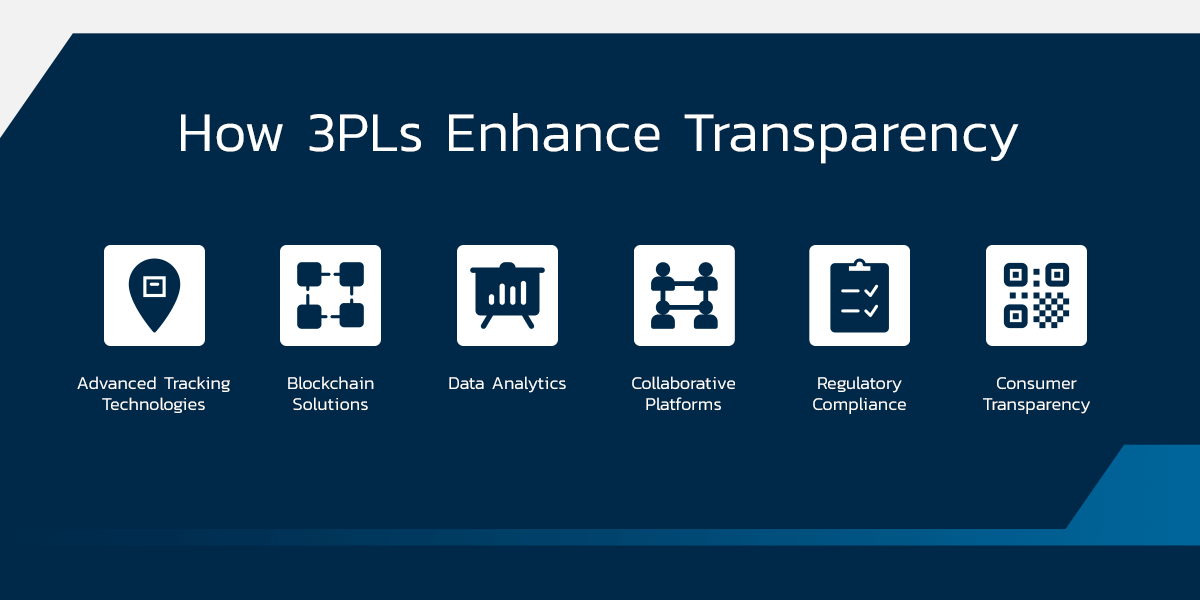
Modern 3PLs are driving greater transparency through technology adoption and integration capabilities that transform how food products are tracked and monitored.
Leading 3PLs deploy real-time monitoring technologies, including GPS, radio-frequency identification tags and Internet of Things sensors, that track location and critical environmental conditions like temperature and humidity.
Providers specializing in food and beverage logistics offer sophisticated track and trace capabilities that provide real-time data on shipments to give businesses unprecedented control over their inventory and enhance supply chain efficiency.
Blockchain technology creates immutable, tamper-proof records of every transaction and transfer within the supply chain. Major food companies partnering with technology-forward 3PLs are implementing blockchain solutions that allow instant access to a product’s complete history.
Blockchain transforms food traceability by creating a single, trusted source of information accessible to all authorized parties. This reduces traceback time from days to seconds during contamination events.
By collecting and analyzing supply chain data, 3PLs identify inefficiencies, predict potential disruptions and optimize operations. These analytical capabilities transform reactive management into proactive optimization.
Effective 3PLs facilitate communication among supply chain participants by creating centralized platforms for information sharing. These systems enable farmers, processors, distributors and retailers to access critical tracking data in real time.
As food safety regulations like the FSMA impose stricter traceability requirements, 3PLs with robust compliance expertise help partners navigate complex regulatory landscapes and maintain necessary documentation.
Forward-thinking 3PLs help brands implement QR codes and other digital tools that allow consumers to access detailed information about product origins, processing methods and handling throughout the supply chain. This helps build trust and brand loyalty.
When 3PLs implement detailed traceability systems, the benefits extend throughout the supply chain.
Food safety improves through faster identification of contamination sources. Precisely targeted actions can replace broad, costly recalls of entire product lines.
Recent FDA rulings make faster identification possible to get potentially contaminated food off the market quickly, potentially resulting in fewer cases of foodborne illness. This targeted approach significantly reduces financial impact and protects brands’ reputations.
Brands that demonstrate a commitment to transparency build consumer trust. Research shows that revealing traceability information has a positive impact on consumer trust and positively impacts purchase intentions.
Better inventory and reduced waste drive operational improvements. The United States Department of Agriculture estimates that food waste in the U.S. is between 30% and 40% of the total food supply. Traceability systems help identify and eliminate food waste throughout the supply chain.
Thorough documentation of product movements and handling conditions simplifies regulatory compliance. For businesses with international supply chains, 3PLs with global expertise provide guidance on varying regional regulations.
As technology advances, 3PLs will play an increasingly critical role in building transparent food supply chains. Artificial intelligence (AI) integration with existing traceability systems promises predictive capabilities that could identify potential contamination before products reach consumers.
Food safety experts emphasize that the future goals of traceability are about more than knowing where food has been. These goals are also about anticipating problems before they occur. Providers with sophisticated data analytics will lead this evolution.
The FDA continues developing its vision for a digital, traceable food system like the Product Tracing System, which is designed to analyze industry traceability data more effectively. The agency is also promoting low-cost traceability solutions to make sure businesses of all sizes can participate in this critical food safety ecosystem.
When selecting a 3PL provider to enhance your food traceability capabilities, consider these factors:
For food companies navigating complex supply chains and rising consumer expectations, partnering with advanced 3PLs is no longer optional. It is a strategic imperative. Those who embrace comprehensive traceability solutions will protect consumers, build brand trust and thrive in an increasingly competitive and regulated industry.
At Allen Distribution, we offer comprehensive 3PL solutions for food and beverage companies seeking to enhance supply chain transparency through advanced tracking technologies, regulatory expertise and nationwide distribution capabilities. Promises Delivered is more than just our motto — it is the way we do business.
Contact us today to discover how our specialized traceability systems can strengthen your food safety compliance and help build consumer trust across your entire supply chain.